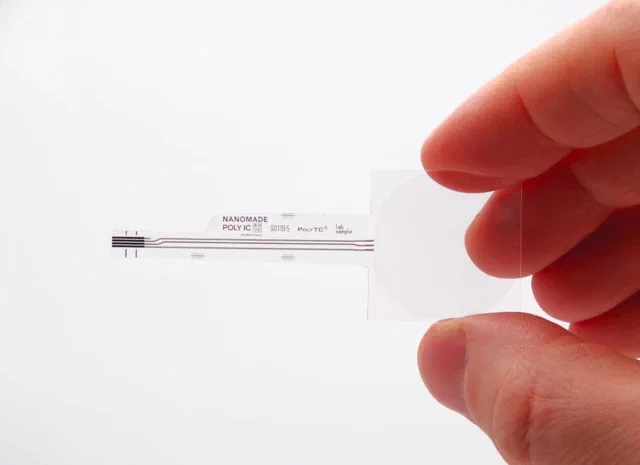
In the ongoing crusade to banish physical buttons to the history books, a new contender has emerged from the labs of Europe. French deep-tech outfit Nanomade, in partnership with German printed electronics specialists PolyIC, has pulled back the curtain on what they claim is the world’s first fully transparent film that pulls double duty, combining capacitive touch with ultra-sensitive force sensing.
The breakthrough, announced on 31 March 2026 in Toulouse, France, is a masterclass in complementary engineering. PolyIC provides the foundation: a transparent, flexible capacitive film embedded with printed conductive electrodes—a technology they’ve spent years refining for high-end touch interfaces. Nanomade then applies the “secret sauce”: a proprietary nanoparticle-based ink that allows the film to detect microscopic deformations.
The result? A single, wafer-thin layer that can transform almost any surface—whether rigid, flexible, flat, or curved—into a sophisticated interface. It doesn’t just register where you’ve touched it; it understands exactly how hard you’re pressing.
Why does this matter?
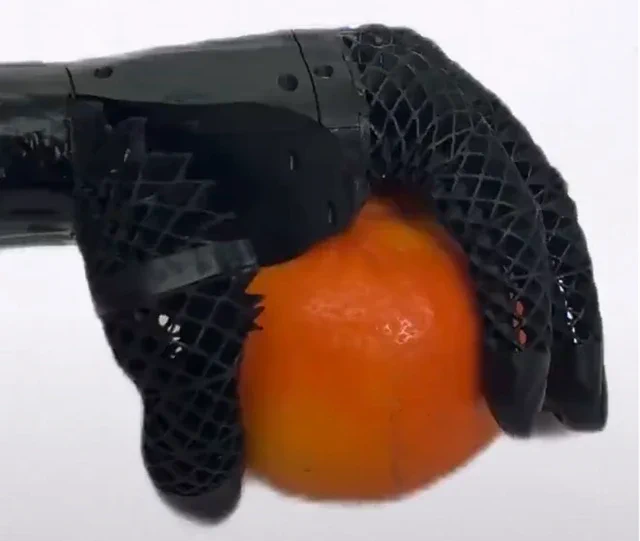
For the robotics industry, this is far more than just a clever party trick for minimalist designers. It represents a potential leap forward in tactile sensing—the electronic equivalent of a biological nervous system. Giving robots a genuine sense of touch, or taction, remains one of the most stubborn hurdles in creating machines capable of handling delicate or complex objects with anything resembling human finesse.
This transparent “skin” could allow a robotic gripper to not only sense that it’s holding an object but to calibrate the exact amount of pressure required to maintain its hold. It’s the fundamental difference between a robot that accidentally crushes a wine glass and one that can serve a drink with grace. Because the foil is both transparent and pliable, it can be layered over a robot’s existing chassis or sensors without obscuring its “vision” or other vital components. While we’ve seen tactile sensors for robotic skins before, this specific cocktail of transparency, flexibility, and dual-mode sensing makes it a compelling frontrunner for the future of safer, more dexterous robotics.