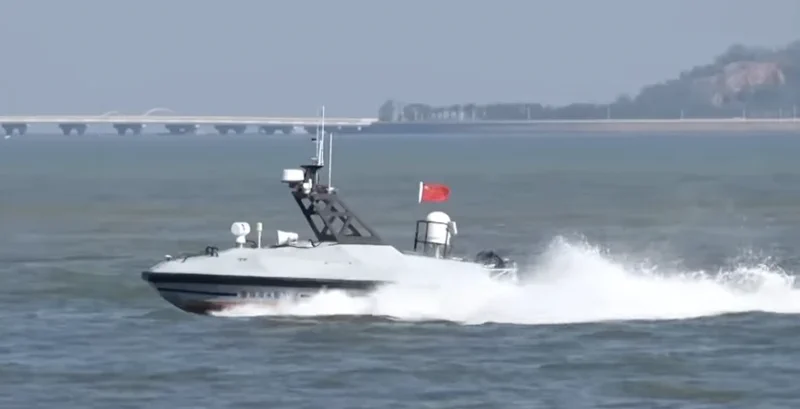
Just when you thought the high seas were safe for your multi-billion pound aircraft carrier, China has decided to play a high-stakes, real-life game of Galaga. Recent footage from an exercise off the coast of Zhuhai in Guangdong Province shows the People’s Liberation Army Navy (PLAN) putting a coordinated swarm of L30 Unmanned Surface Vessels (USVs) through their paces—and it looks every bit as ominous as you’d imagine.

The video captures a pack of sleek, low-profile drone boats executing complex manoeuvres without a single soul on board. According to sources, these L30 USVs demonstrated autonomous patrolling, detection, and the interception of a simulated intruder vessel. Each 7.5-metre craft can hit speeds of 35 knots (roughly 40 mph) and boasts an operational range of over 300 nautical miles. They aren’t just there to keep an eye on things, either; they’re designed for “active enforcement,” which is a polite way of saying they can physically intervene, including ramming a target into submission if necessary.
This isn’t merely a flashy tech demo; it’s a glaring signal of a strategic pivot in naval doctrine. The exercise, which took place around 25 March 2026, showcased “centralised command with decentralised execution”—essentially, the swarm operates as a single, intelligent entity. While an individual boat might look relatively harmless, their true power lies in their numbers and their inherent expendability.
The Big Picture
The era of the majestic, crew-heavy battleship may be entering its twilight years, replaced by an age of disposable, autonomous piranhas. This test represents a massive leap in what military strategists call “asymmetric warfare.” Why risk a billion-pound destroyer and hundreds of sailors when you can overwhelm an adversary with a cloud of cheap, AI-driven boats that don’t mind being sent on a one-way trip?
This technology is a direct challenge to traditional naval power structures, particularly the carrier strike groups that the U.S. Navy relies so heavily upon. The strategic calculus is simple and brutal: a swarm can saturate and overwhelm even the most sophisticated defence systems through sheer volume. As China continues to pursue its “intelligentisation” doctrine—a state-level push to bake AI into every corner of the military—expect to see a lot more of these robotic wolf packs prowling the waves. Naval planners across the globe are officially on notice.