When you think of a military drone, your mind likely drifts to radar-absorbent composites, stealth coatings, and eye-watering price tags. You probably don’t picture waxed cardboard held together with heavy-duty rubber bands. Yet, Australian firm SYPAQ Systems is proving that battlefield supremacy can come in a flat-pack box. The company has been supplying its Corvo Precision Payload Delivery System (PPDS) to Ukraine, where it’s being deployed for everything from last-mile logistics to reconnaissance and—if reports are to be believed—one-way “kamikaze” strikes. The most startling figure? Each unit costs roughly £2,700 ($3,500).
The Corvo PPDS is, for all intents and purposes, a military-grade IKEA project. Delivered as a flat-pack kit, the airframe is constructed from waxed foamboard, making it impressively light and weather-resistant. It sports a range of up to 120 km (75 miles), cruises at 60 km/h, and carries a standard 3 kg payload, though it can be pushed to 5 kg in a pinch. While the high-end avionics and motor are designed to be salvaged and reused, the airframe itself is treated as a “single-use” asset.
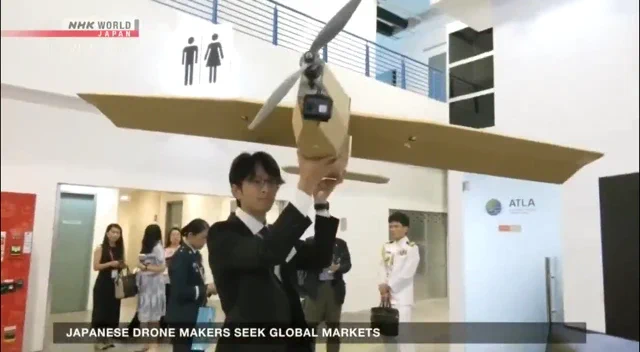
The drone’s DIY aesthetic has turned it into a viral sensation, though social media has a habit of muddying the waters. Many posts have conflated the Corvo’s specs with another emerging cardboard contender: the AirKamuy 150 from Japanese startup AirKamuy Inc. That particular bird boasts a 120 km/h top speed and a five-minute assembly time, operating under the chillingly pragmatic motto that their tech can transform “every cardboard factory… into an arsenal.”
Why should we care?
This isn’t just a quirky bit of “MacGyvered” engineering; it represents a fundamental shift in military doctrine. The Corvo PPDS is the poster child for “attritable” systems—hardware that is cheap enough to be lost in action without causing a strategic or financial crisis. When a drone costs less than a top-spec MacBook Pro, commanders can afford to take risks that would be unthinkable with a multi-million-pound Reaper or Global Hawk.
This pivot toward disposable, low-cost aerial warfare is picking up speed globally. Across the Atlantic, the U.S. Army has developed the Attritable Battlefield Enabler (ABE 1.01), a 3D-printed combat drone that costs a mere £580 ($740) to churn out at scale. Whether it’s folded in a box factory or printed in a shipping container near the front lines, the message is loud and clear: the future of tactical air power is becoming cheaper, more accessible, and profoundly more expendable.