NVIDIA has just thrown down the gauntlet in the high-stakes race for autonomous driving, unveiling Alpamayo on 5 January 2026. This isn’t just another shiny perception model; it’s a full-blown open ecosystem designed to give self-driving cars the one thing they’ve been desperately missing: the ability to reason and show their working. CEO Jensen Huang hailed it as the “ChatGPT moment for physical AI,” intended to help vehicles navigate those tricky, one-in-a-million “edge case” scenarios that usually leave software baffled.
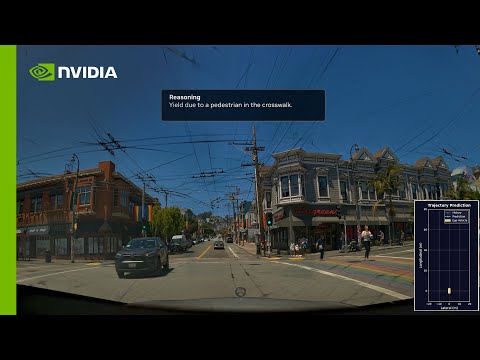
The debut release, Alpamayo 1, is a heavy-hitting vision-language-action model (VLAM). In layman’s terms, it bridges the gap between what the car sees and a linguistic understanding of the world to decide exactly what to do. This allows the system to produce “explicit reasoning traces”—meaning it can actually tell you why it decided to swerve around that stray supermarket trolley. To power this, NVIDIA is also dropping its Physical AI dataset, a gargantuan library featuring over 300,000 real-world driving clips filmed across more than 2,500 cities.
Why is this the real deal?
For years, the autonomous vehicle industry has been stuck in a bit of a trust-fall exercise with a sceptical public. “Black box” models that make split-second decisions without any hint of an explanation haven’t exactly helped win hearts and minds. By pivoting towards explainable AI (XAI) that can articulate its thought process, NVIDIA is tackling the trust deficit head-on.
This shift towards reasoning-led models is the secret sauce—and likely the mandatory ingredient—for finally breaking through the Level 3 ceiling and reaching true, hands-off Level 4 autonomy, where the car handles the heavy lifting without human intervention. Ultimately, it’s no longer just about spotting the road; it’s about finally understanding it.